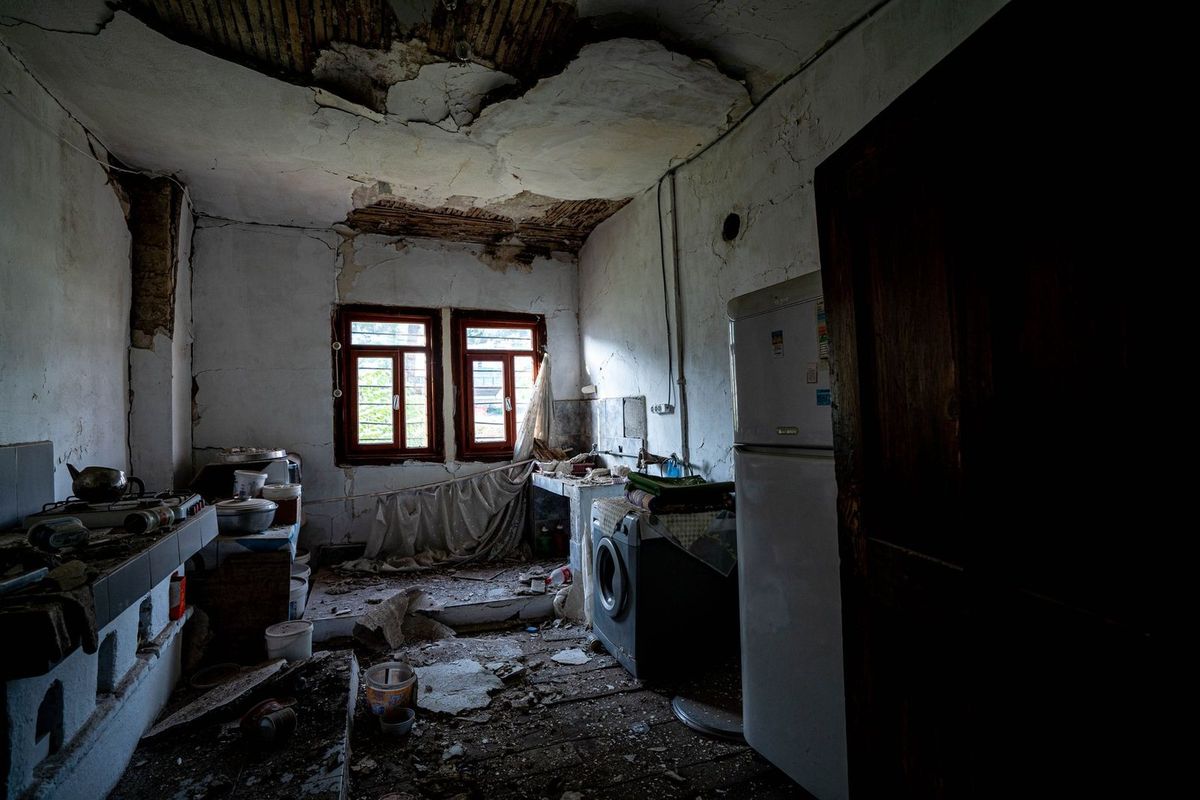
The fires that happen most in Seattle homes are the small ones: a pan left on the stove, a microwave, a toaster, a candle, a space heater against the curtains, a dryer. Most are out within minutes, by the homeowner or an extinguisher, with little visible damage. Then the smell starts, and three weeks later the family is still living in it.
Protein residue
Burning food, grease and animal products produce protein smoke, a nearly invisible, greasy film that travels through the house on heat and settles on every surface. It bonds to paint, varnish, laminate and plastics, discolors them slowly and holds a pungent odor that household cleaning does not touch. Because there is little black soot, people assume the damage is confined to the kitchen. It almost never is: the technician finds it on the ceiling of the far bedroom, inside the hall closet and in the return-air duct.
The honest assessment
Not every small fire is a professional job. A technician can inspect the house in about an hour, find how far the residue traveled, and tell you plainly whether this is a few days of professional cleaning or something you can handle with the right degreaser and a lot of patience. When it is a job, you get the scope in writing so you can decide whether to file a claim.
The cleanup
Every surface the residue reached is degreased with agents made for it, including the inside of cabinets, light fixtures, window coverings, the top of the refrigerator and the ceiling throughout. The HVAC system is cleaned if it ran. Discolored paint and varnish near the fire are sealed and refinished, because protein residue bleeds through ordinary paint. Odor is treated with thermal fogging or hydroxyl after cleaning, never instead of it. Textiles, curtains and upholstery are cleaned or listed.
Appliances and the fire source
The range, hood, microwave or appliance that started it is documented as the cause and evaluated for repair or replacement. Keep it until the adjuster has seen it if you file a claim. The circuit and outlet are checked by an electrician if the cause was electrical.
Other small fires
Candle and space-heater fires produce wet smoke from synthetics, which is stickier and smears; dryer fires produce lint soot through the laundry area and ducts; electrical fires in walls leave residue in cavities that have to be opened. Each follows the same assess-clean-deodorize-document sequence with the agents the residue requires.
On the claim, or not
If you file, the scope is written in Xactimate and billed directly to your insurer on covered work, with your deductible applying as your policy states. If the loss is under your deductible or you choose not to file, you get a written estimate and decide, with no pressure either way.